Flagship System Artifact

Fictional Company

IronRidge

Connected construction operating environment

IronRidge field-to-office operating ecosystem.

IronRidge Construction is fake.

The problems are not.

This is a realistic contractor environment built to show how operational pressure moves across intake, ownership, field reality, and executive visibility.

Reading Frame

This isn't four random demos.

It's one system, broken into four layers so you can actually see how it works.

The goal is simple: show what cleaner execution looks like from start to finish.

Why This Exists

Most contractor environments are harder than they should be.

Too many disconnected systems. Too many things falling through the cracks. Too little visibility into what's actually happening.

Field and office don't stay aligned. Commitments get made and quietly drift. Problems show up late when they're expensive.

IronRidge shows what happens when you fix that.

Not with more software.

With better-connected systems.

The Four Connected Systems

Four layers. One system.

Each one handles a different part of the work. Together, they create an environment where things don't get lost, ignored, or buried.

Workflow Entry Layer
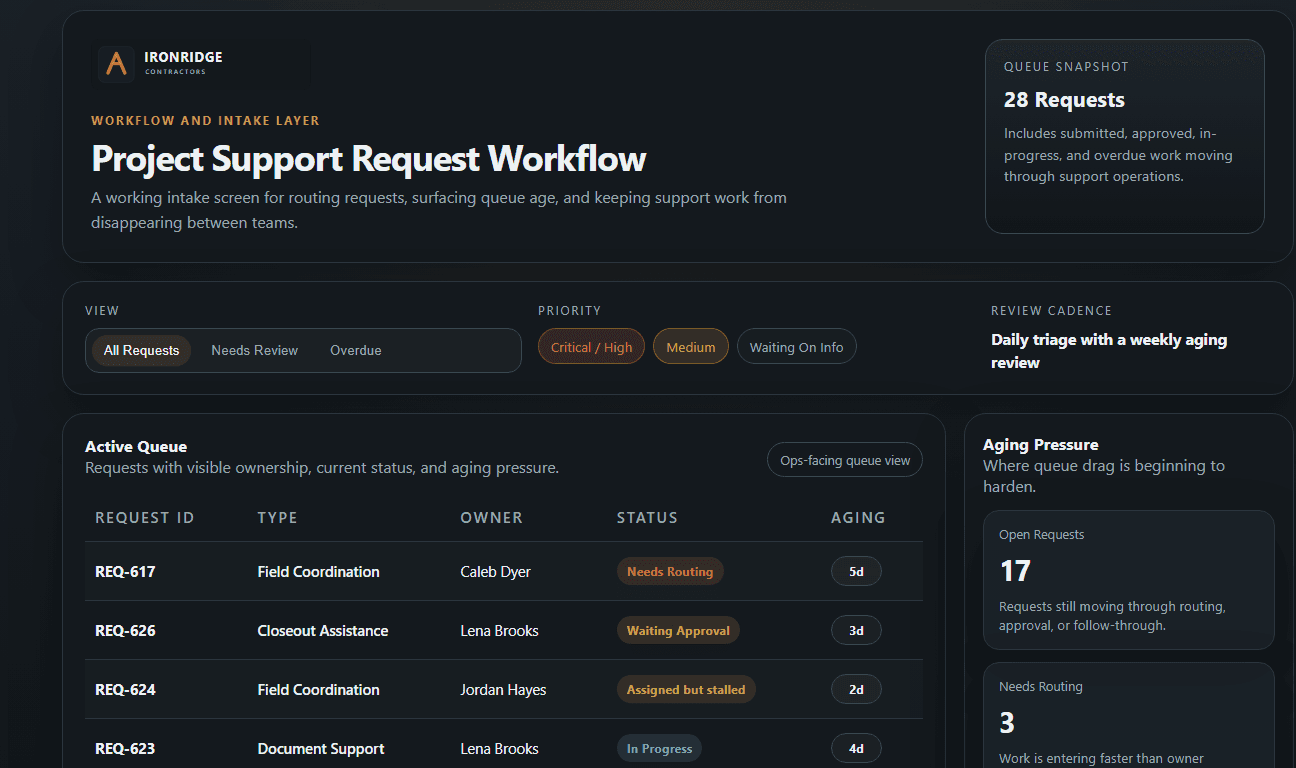
Workflow queue showing intake pressure and aging requests

REQ-617 enters here as field coordination pressure.

Workflow Drag Reduction

This is where everything starts.

Requests, issues, and interruptions show up here first. If this layer is messy, everything downstream breaks. This system captures work early, reduces confusion, and gives the rest of the system clean inputs to work from.
Commitment Layer

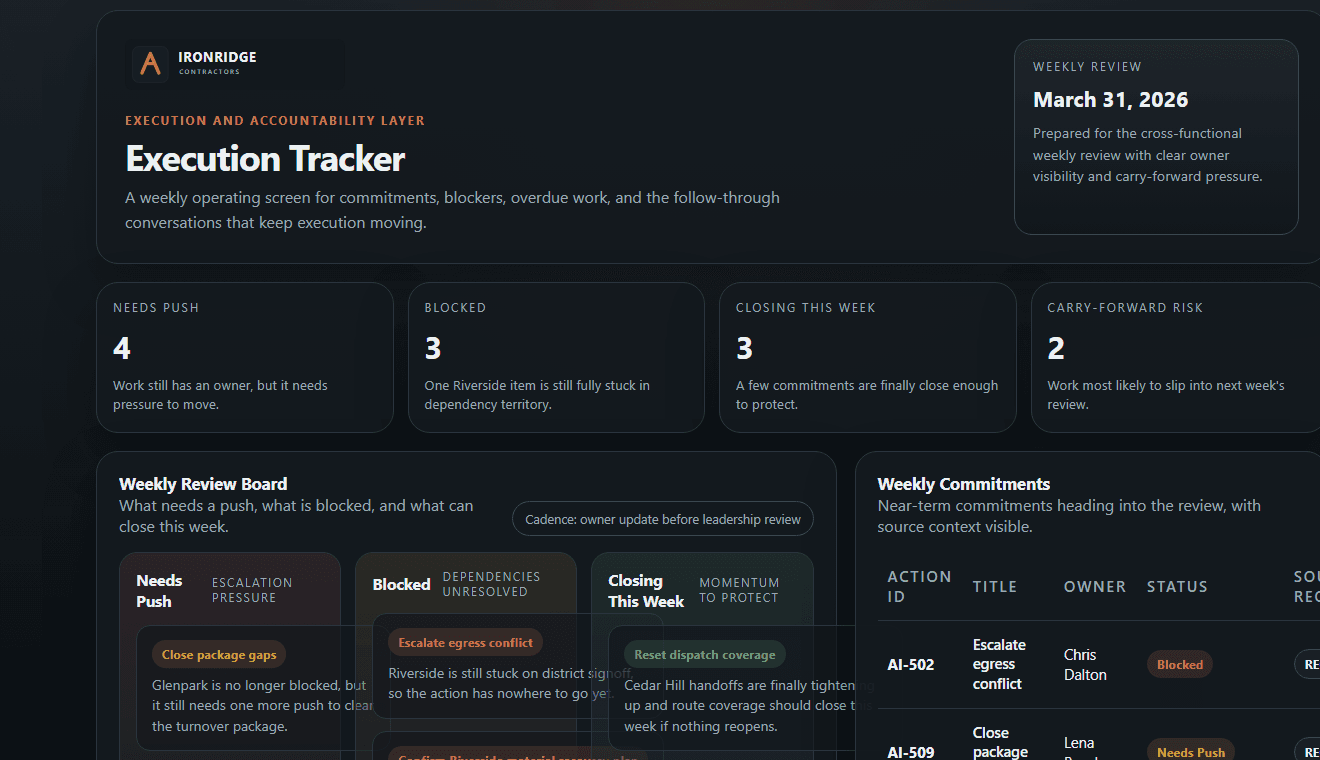
Execution review board showing blocked and closing commitments

REQ-617 becomes AI-502 - now owned, but still blocked.

Execution Infrastructure

This is where work either survives or dies.

Most commitments fade because nothing is holding them in place. This layer fixes that. It creates ownership, deadlines, and review loops so work does not just get discussed, it actually moves.

Field Reality Layer

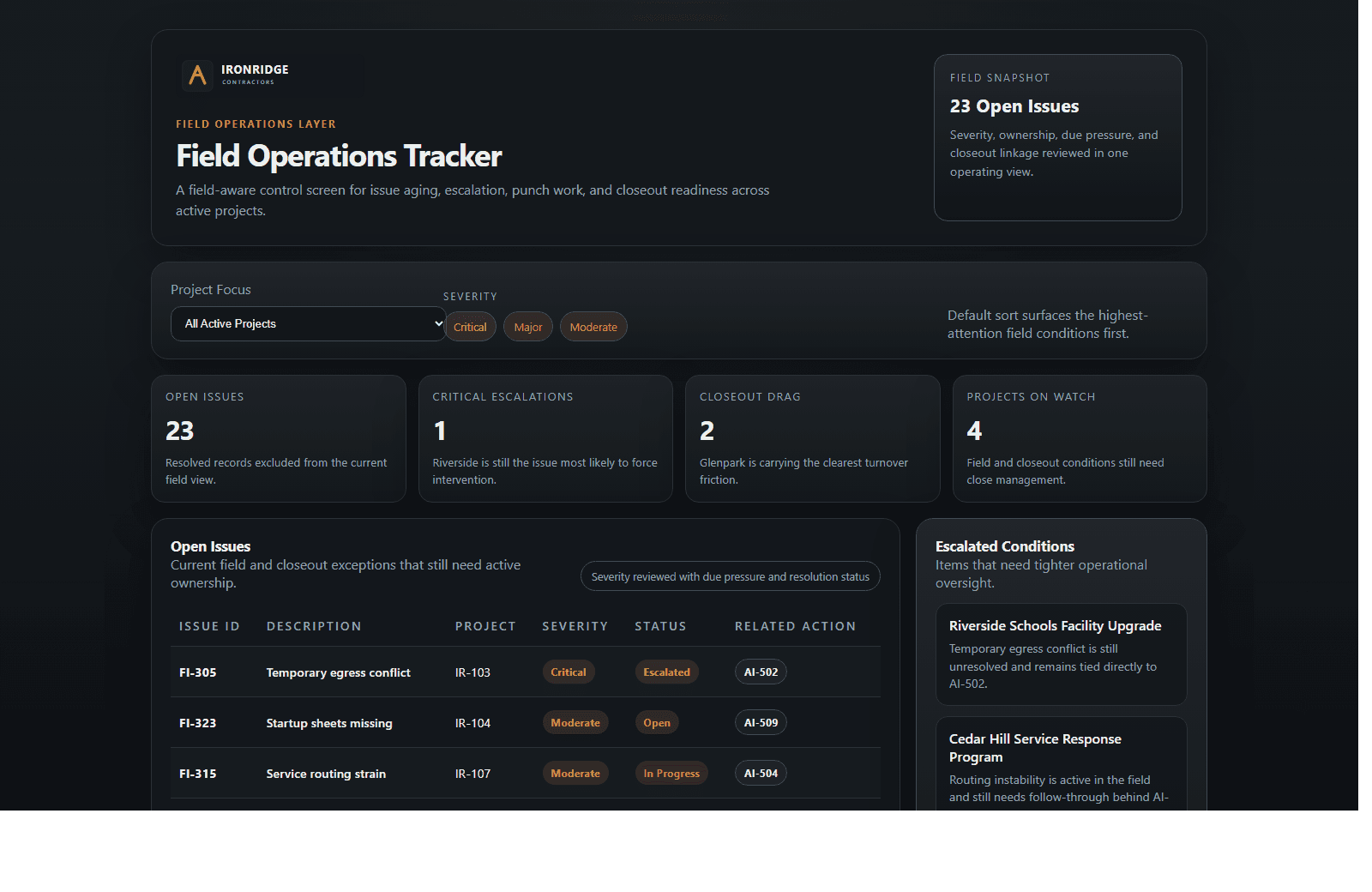
Field operations view showing escalated issues and closeout pressure

AI-502 now shows up as FI-305 in the field.

Contractor Ops System

This is where the truth shows up.

What is actually happening in the field. What is behind. What is stuck. Most systems hide this until it is too late. This layer surfaces real conditions, closes the gap between field and office, and makes problems visible early enough to fix.

Leadership View Layer

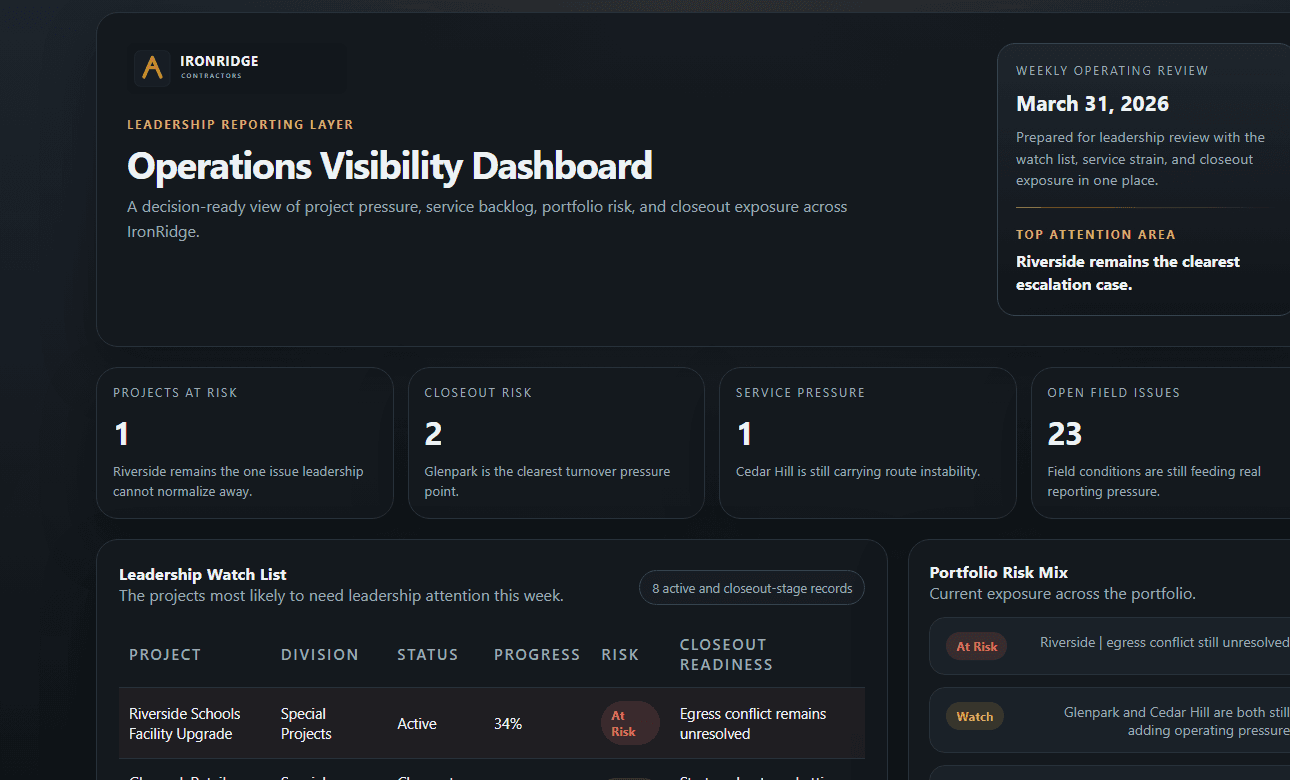
Leadership dashboard showing executive risk and watch-list pressure

The same issue now shows up as executive risk.

Ops Visibility

This is where everything comes together.

Leaders do not need more data. They need a clear read on what is at risk, where pressure is building, and what needs attention now. This layer turns noise into signal.

How The Layers Connect

The power isn't in the individual screens.

It's in how the system behaves as a whole.

01

Work enters cleanly so nothing gets lost.

New requests, issues, and follow-ups start in a cleaner intake layer so the system knows what changed and what now needs attention.

02

Commitments get structure so they don't fade.

Commitments gain ownership, review cadence, and enough structural pressure to survive beyond the initial conversation.

03

Field reality feeds back so problems don't hide.

Operational truth comes back into view through the contractor ops layer instead of getting buried inside status language.

04

Leadership sees clearly so decisions happen earlier.

Risk, pressure, and bottlenecks become visible in a way that supports earlier intervention and better decisions.

Why This Matters

This changes how a business runs.

Less chaos
Less guessing
Less last-minute fire drills
Work moves forward
Follow-through improves
Problems show up earlier
Decisions get easier

Executive Analytics Extension

Once the system is connected, analytics becomes powerful.

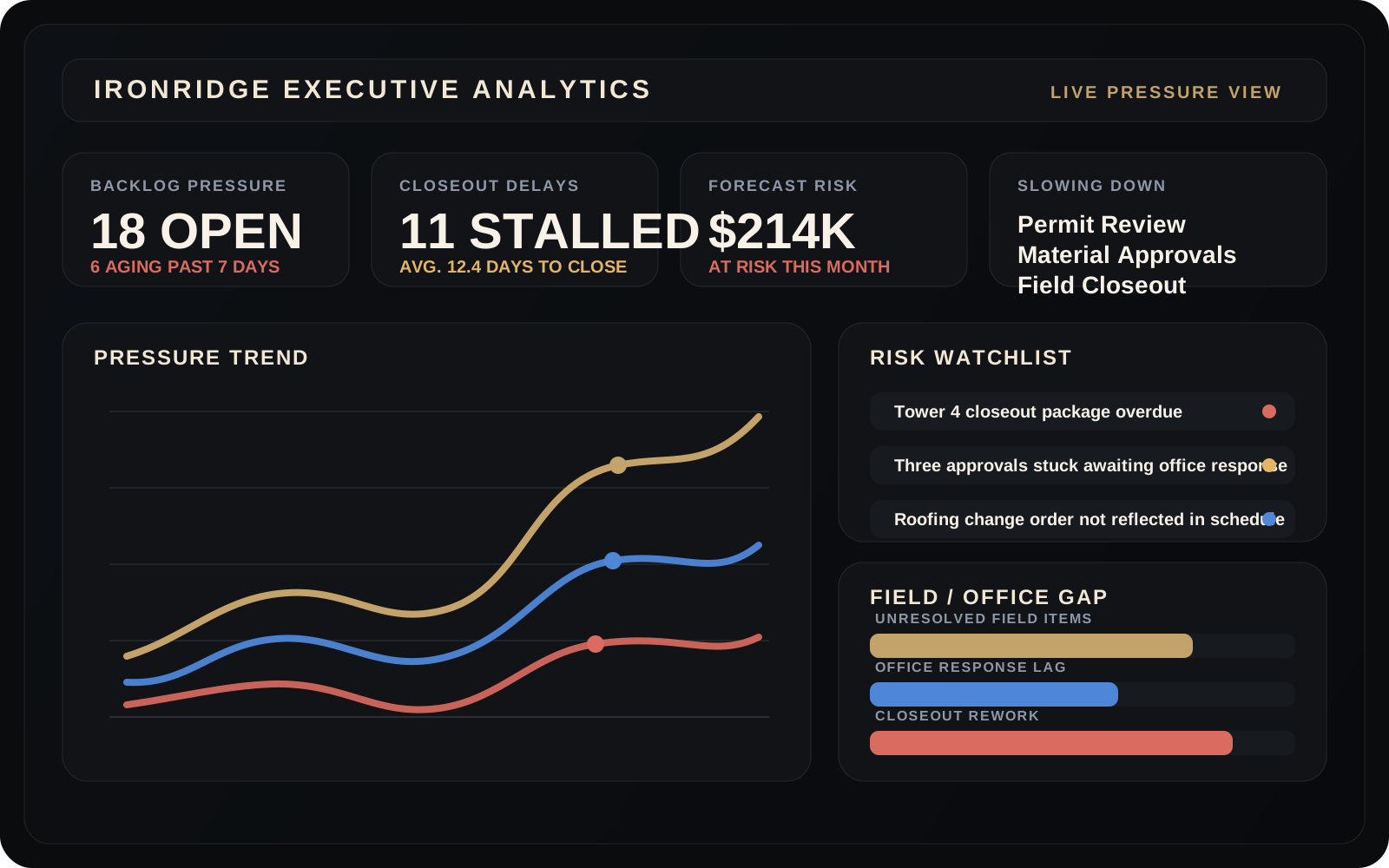
Now you can actually see backlog pressure, closeout delays, forecast risk, and where things are slowing down.

This is where Power BI and executive dashboards start to matter.

Executive analytics dashboard preview showing backlog pressure, closeout delays, forecast risk, and slowdown signals.

Continue

If this feels familiar, you already know the problem.

Disconnected systems create friction.

Connected systems create momentum.

Explore how this thinking shows up in real builds or reach out if you want something like this in your own environment.